
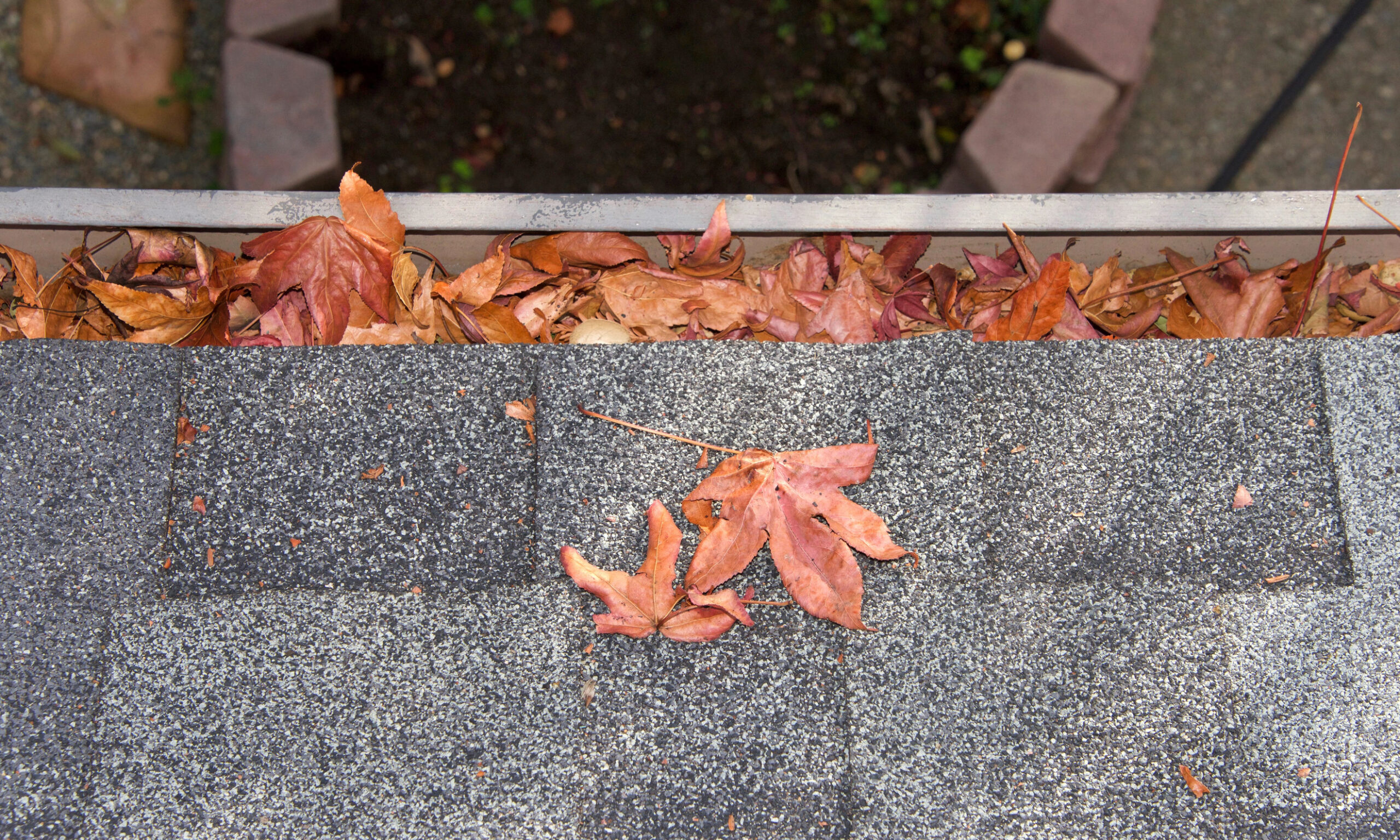
How to Avoid Costly Winter Damage From Clogged Gutters
However, when you’re getting your Minnesota home ready for winter, clogged gutters may not be your first concern.
There are furnaces to check, outdoor faucets to winterize, patio furniture to put away, and plenty of leaves to rake. It can be tempting to look at a gutter filled with leaves and think, “I’ll deal with that in the spring.”
Unfortunately, winter may not wait.
Clogged gutters in Minnesota can create problems beyond an overflowing gutter. Additionally, when debris prevents water from draining properly, fall rain and melting snow have nowhere to go. Add freezing temperatures, snow, and ice, and a simple maintenance issue can become a costly exterior problem.
That’s why fall gutter maintenance in Minnesota deserves a place on your pre-winter checklist.
Here’s what homeowners should know about clogged gutters, potential winter damage, and the steps that can help prepare a gutter system for the months ahead.
Why Fall Gutter Maintenance in Minnesota Is So Important
Your gutter system has a straightforward job: collect water coming off the roof and direct it safely away from your home.
When everything is working correctly, rainwater and melting snow enter the gutters, move toward the downspouts, and drain away from your siding, landscaping, and foundation.
A clog interrupts that process.
Instead of flowing away, water may sit in the gutter, spill over its edges, back up toward the roof line, or freeze when temperatures fall.
Minnesota’s climate makes this especially important because gutters may experience rain, wet leaves, freezing temperatures, snow, thawing, and refreezing in a relatively short period.
Cleaning and inspecting them before winter gives the system the best chance to function properly when conditions get tougher.
1. Clogged Gutters Can Lead to Costly Gutter Damage
Water is heavy. Ice is even less forgiving.
When a gutter is packed with wet leaves and debris, it already carries additional weight. If trapped water freezes inside it, the added weight can put more stress on the gutters, fasteners, and fascia.
Over time, you may notice:
- Sagging gutter sections
- Gutters pulling away from the house
- Loose fasteners
- Separated joints
- Bent or distorted gutter sections
- Leaking seams
- Damaged fascia behind the gutter
A small maintenance issue can therefore become actual gutter damage.
Once a gutter begins sagging, its slope can change as well. That makes drainage less effective, potentially allowing even more water to remain in the system.
This cycle is one reason it makes sense to clean gutters before winter rather than assuming frozen debris can simply wait until spring.
2. Overflowing Water Can Damage Fascia and Siding
Your gutters are positioned along the edge of the roof for a reason. They catch runoff before it pours directly down the exterior of the house.
When the gutters are blocked, that controlled drainage disappears.
Water may spill over the front of the gutter, but it can also work its way behind the gutter and against the fascia.
Persistent moisture around exterior building materials can contribute to deterioration over time.
Overflow can also run down siding, creating staining or exposing vulnerable areas to repeated moisture.
During warmer weather, you may notice the problem because water pours over the gutter during a storm. During winter, however, much of that water can freeze before you ever see it draining.
Large icicles hanging from an overflowing gutter may look like a normal part of a Minnesota winter, but they can also be a clue that drainage around the roof line deserves attention.
3. Poor Drainage Can Affect the Foundation
The gutter system doesn’t stop protecting your home when water reaches the downspout.
Where that water goes next matters too.
Gutters and downspouts are designed to move roof runoff away from areas where it could collect near the foundation. When gutters overflow or downspouts are clogged, water may fall directly beside the house instead.
Repeated water accumulation near the foundation can contribute to:
- Soil erosion
- Landscape damage
- Water collecting near foundation walls
- Increased moisture around the basement
- Freeze-thaw stress around concrete and soil
This is one reason gutter maintenance should involve more than pulling leaves out of the trough.
Check the entire drainage path.
Downspouts should be open, securely attached, and positioned so water can move away from the house. Extensions may be helpful where runoff otherwise empties too close to the foundation.
4. Ice Dams and Gutters Are Related—But Not in the Way Many Homeowners Think
Winter conversations about gutters often lead to ice dams.
There is an important distinction to make: clogged gutters do not create the underlying conditions that cause most ice dams.
According to the University of Minnesota Extension, ice dams develop when uneven roof temperatures allow snow to melt on warmer portions of the roof and then refreeze when the water reaches colder areas near the eaves.
Heat escaping from the home into the attic is often a major contributor.
So where do gutters come into the picture?
Blocked or frozen gutters can make drainage around the roof edge less effective and add additional ice buildup and weight along the eaves. In other words, clean gutters won’t fix an attic heat-loss problem, but a clogged drainage system certainly does not help your home’s winter water-management system.
When thinking about ice dams and gutters, homeowners should treat them as related parts of a bigger winter-readiness picture that includes:
- Roof condition
- Attic air sealing
- Insulation
- Roof-edge temperatures
- Gutters
- Downspouts
- Exterior drainage
If your home has experienced significant ice dams in previous winters, simply cleaning the gutters may not address the root cause. The attic and roof system may deserve additional evaluation.
5. Frozen Downspouts Can Back Up the Entire System
Even perfectly clean gutters won’t work properly if water can’t exit through the downspouts.
Leaves and debris often collect at downspout openings or inside elbows, where the clog isn’t always easy to see.
During a fall rainstorm, you may notice little or no water coming from a downspout despite plenty of water entering the gutter above it.
That is a warning sign.
Once winter arrives, standing water inside a partially blocked downspout can freeze, creating an even more stubborn obstruction.
Before temperatures remain below freezing, make sure water can travel through each downspout and discharge where intended.
6. Clogs Can Be Harder to Deal With After Winter Arrives
There is another practical reason to deal with gutters in the fall: access.
Removing dry leaves from an accessible gutter on a mild autumn day is one thing. Trying to address a gutter packed with frozen leaves, snow, and ice in January is something entirely different.
Winter gutter and roof work can also introduce significant safety concerns.
Snow-covered roofs, icy ladders, frozen ground, and falling ice are not conditions homeowners should take lightly.
Completing routine maintenance before winter eliminates the need to address many preventable problems under much more difficult conditions.
What Should Fall Gutter Maintenance Include?
Good fall gutter maintenance in Minnesota goes beyond simply removing visible leaves.
Before winter, consider checking the following:
- Remove leaves, pine needles, twigs, and other debris.
- Check that water can move freely toward downspouts.
- Make sure downspouts aren’t blocked.
- Look for sagging or improperly pitched gutter sections.
- Check for loose brackets or fasteners.
- Look for cracks, holes, or leaking seams.
- Check whether gutters are separating from the fascia.
- Make sure downspouts discharge water away from the foundation.
- Look for heavy accumulations of roofing granules.
- Check gutter guards for debris buildup or damage if your home has them.
Homeowners should always prioritize safety. If cleaning requires working from a high ladder, accessing a steep roof line, or dealing with difficult-to-reach areas, professional assistance may be the safer option.
When Is It Time to Replace Rather Than Repair Gutters?
Cleaning cannot fix every gutter problem.
Older or damaged gutter systems may reach a point where repeated repairs no longer make sense.
Signs that gutters may need more than routine maintenance include:
- Extensive sagging
- Multiple leaking joints
- Sections repeatedly pulling loose
- Significant corrosion
- Cracks or holes
- Chronic drainage problems
- Gutters that are undersized for the roof
- Water consistently overflowing despite being clean
- Repeated repairs in the same areas
The right solution depends on the condition and design of the existing system.
An inspection can help determine whether cleaning, repair, drainage improvements, or replacement is the appropriate next step.
How Seamless Gutters Can Reduce Potential Trouble Spots
Traditional sectional gutter systems contain multiple joints along each run. Those joints can become potential leakage points as the system ages.
Seamless gutters in Minnesota are formed in continuous sections sized for the home, reducing the number of seams along the main gutter runs.
Koska Construction installs custom 5-inch and 6-inch seamless aluminum gutter systems on-site. The company also offers over sized downspouts, drainage extensions, and micro-mesh gutter guard systems designed to help keep leaves, twigs, shingle granules, and other debris out while allowing water to enter the gutter.
Seamless construction does not eliminate the need to monitor your gutter system, but reducing unnecessary joints can help create a cleaner, more efficient drainage setup.
Can Gutter Protection Reduce Fall Maintenance?
For Minnesota properties surrounded by mature trees, fall gutter cleaning can become a recurring chore.
Gutter protection in Minnesota can help limit the amount of leaves and larger debris that enter the gutter system.
A quality gutter guard system should allow water to enter while helping shed leaves, needles, twigs, and similar material.
Gutter protection does not mean a homeowner should never look at the gutters again. Guards and roof edges can still require occasional inspection and maintenance.
However, a properly designed system can reduce the volume of debris accumulating inside the gutters, which may be particularly helpful for homes surrounded by trees.
Don’t Let a Simple Fall Chore Become a Winter Expense
Cleaning gutters isn’t the most exciting fall home-maintenance project, but that’s exactly why it is easy to postpone.
The problem is that Minnesota weather can turn procrastination into something more complicated.
A gutter packed with leaves can trap water. Water can freeze. Added weight can strain the gutter system. Overflow can affect siding and fascia, and poor drainage can direct water toward areas where you don’t want it.
None of that means every clogged gutter will lead to expensive damage. It does mean that clearing and checking the system before winter is a relatively simple way to reduce avoidable risk.
Good fall gutter maintenance in Minnesota is ultimately about keeping water moving in the right direction—off the roof, through the gutters and downspouts, and safely away from the home.
Before the snow settles in for the season, taking a little time to understand the condition of your gutter system can provide valuable peace of mind.
Contact Us
If you have questions about the condition of your gutters, drainage system, roof, or other exterior components, Koska Construction serves homeowners throughout the Twin Cities, Brainerd Lakes region, and surrounding central Minnesota communities.
Koska Construction provides custom seamless aluminum gutters, gutter protection systems, over sized downspouts, drainage solutions, roofing, siding, windows and doors, and storm-damage restoration.
Koska Construction
3321 Saint Francis Blvd.
Anoka, MN 55303
Phone: (218) 839-5737
Email: KoskaConstructionLLC@gmail.com
Website: koskaconstruction.com
Minnesota Contractor License: BC-788074